

Selling an old phone sounds easy until you try to do it yourself. You take photos, write a listing, set a price, answer messages, deal with low offers, check payment, pack the device, and hope the buyer does not cause problems after delivery.
On paper, a private sale can look like the obvious winner. A buyer on Facebook Marketplace, eBay, Swappa, or another marketplace may offer more than a trade-in quote at first glance. That higher number can be tempting, especially if you are trying to fund your next phone.
So, is it better to trade in or sell once the work and risk are counted? Private selling can bring a higher gross price, but the amount you keep may change after platform costs, shipping decisions, buyer behavior, and hours of effort. A trade-in may look lower upfront, but it gives you a clearer route to payment and removes much of the work.
This guide breaks down the math behind trading in versus selling privately, so you can compare the number you see with the money you actually keep.
Is It Better to Trade In or Sell Privately?
For most people, trading in is the better option if they want a faster, safer, and more predictable sale. Selling privately can make sense if you already know how to price electronics, handle buyer messages, verify payment, pack shipments, manage returns, and protect yourself from scams.
The important difference is gross price versus net payout. A private buyer may offer more for your phone, but the final amount can drop once the sale moves through a real process.
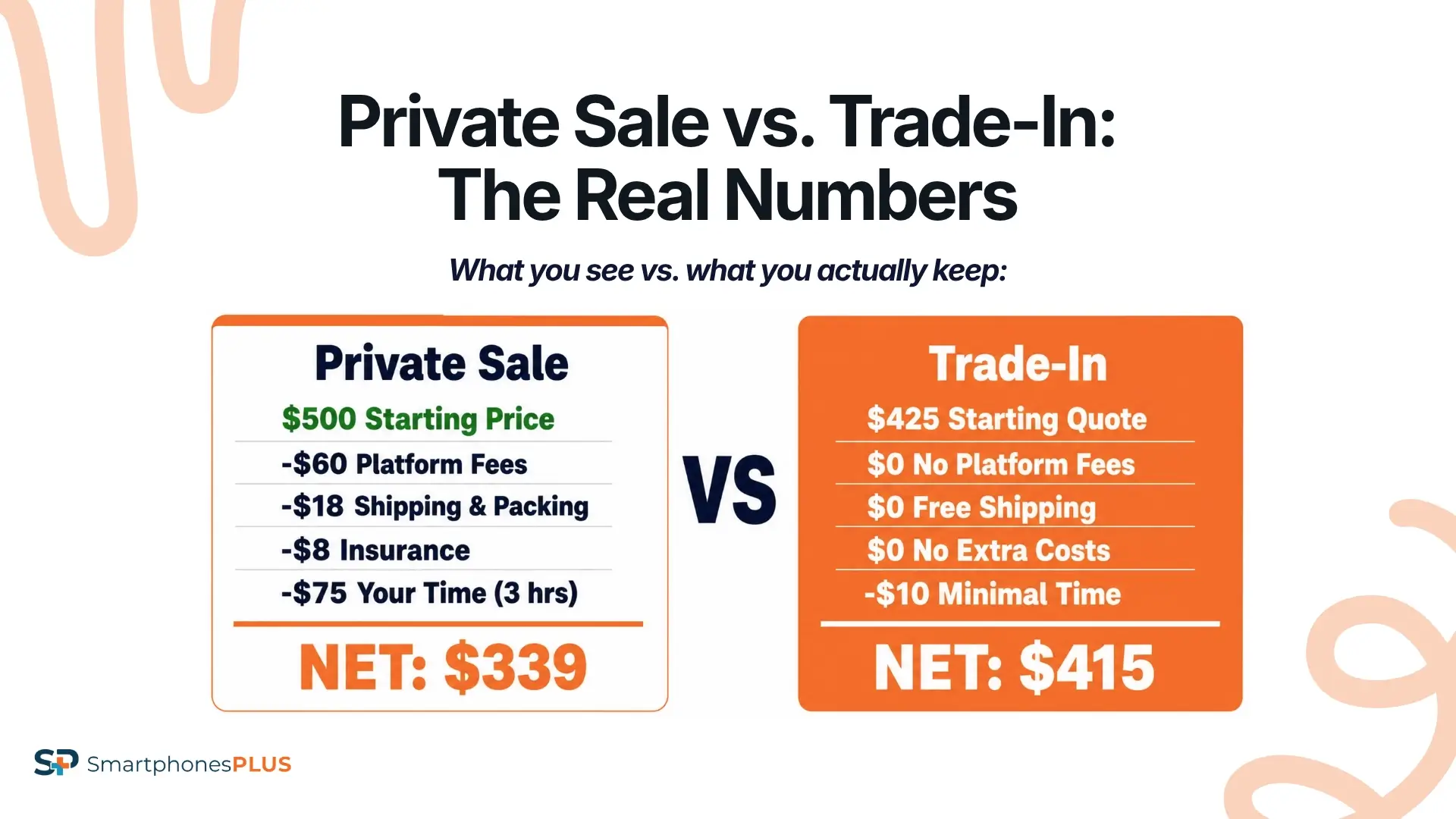
Here is a realistic example using a phone that could sell privately for $500 or receive a $425 trade-in quote.
| Cost Factor | Private Sale | Trade-In |
| Starting offer or sale price | $500 | $425 |
| Marketplace or payment fees | -$60 | $0 |
| Shipping and packing | -$18 | $0 |
| Extra insurance | -$8 | Optional |
| Time spent selling at $25 per hour | -$75 | -$10 |
| Estimated net amount | $339 | $415 |
The private sale looks better at the start. After the hidden costs, the trade-in may leave you with more usable money and much less stress.
The Gross Price Problem
The biggest mistake sellers make is comparing the highest possible private-sale price against a guaranteed trade-in quote. Those numbers are not measuring the same thing.
A marketplace listing shows what you hope to get. A trade-in quote shows what you can receive if the device matches the condition you selected. One number still has to pass through negotiation, platform rules, buyer expectations, and delivery.
A $500 listing may sit for days with no serious buyer. Someone may offer $420. Another person may ask to meet across town. A buyer may want more photos, more proof, or a lower price because the charger is missing. The visible price can be real, but it is not guaranteed until the sale is complete and the money is safely yours.
Fees Can Cut Into Private Sale Profit
Fees are where the private-sale number starts to change. Marketplace fees vary by platform, category, seller type, payment method, and location. Payment processors may also charge fees depending on how the transaction is handled.
A $500 sale can lose $50 to $75 before packing, postage, or insurance enter the picture. If the buyer requests a return, the calculation can become even less attractive.
This is where the decision becomes more practical than it first looks. A trade-in does not require you to calculate platform fees or wonder how much of the sale price will survive after the transaction closes.
At SmartphonesPLUS, the quote is based on the device details you provide. If the model, condition, carrier status, and account status match during inspection, the sale moves forward without marketplace fees eating into the payout.
Time Has a Real Cost
Most sellers do not charge their own time against a private sale. They should.
Selling a phone privately can take hours. You may need to clean the device, photograph it, research pricing, write the listing, reply to messages, screen buyers, meet someone in person, pack the phone, print labels, track shipping, and respond after delivery.
If you value your time at $25 per hour and the sale takes three hours, that is $75 of hidden cost. Deciding to trade or sell changes once your own time has a dollar value.
Trading in takes fewer steps. You get a quote, ship the device, and wait for inspection. That simpler process can be worth real money if your evening, weekend, or workday is already full.
Selling to Strangers Adds Risk
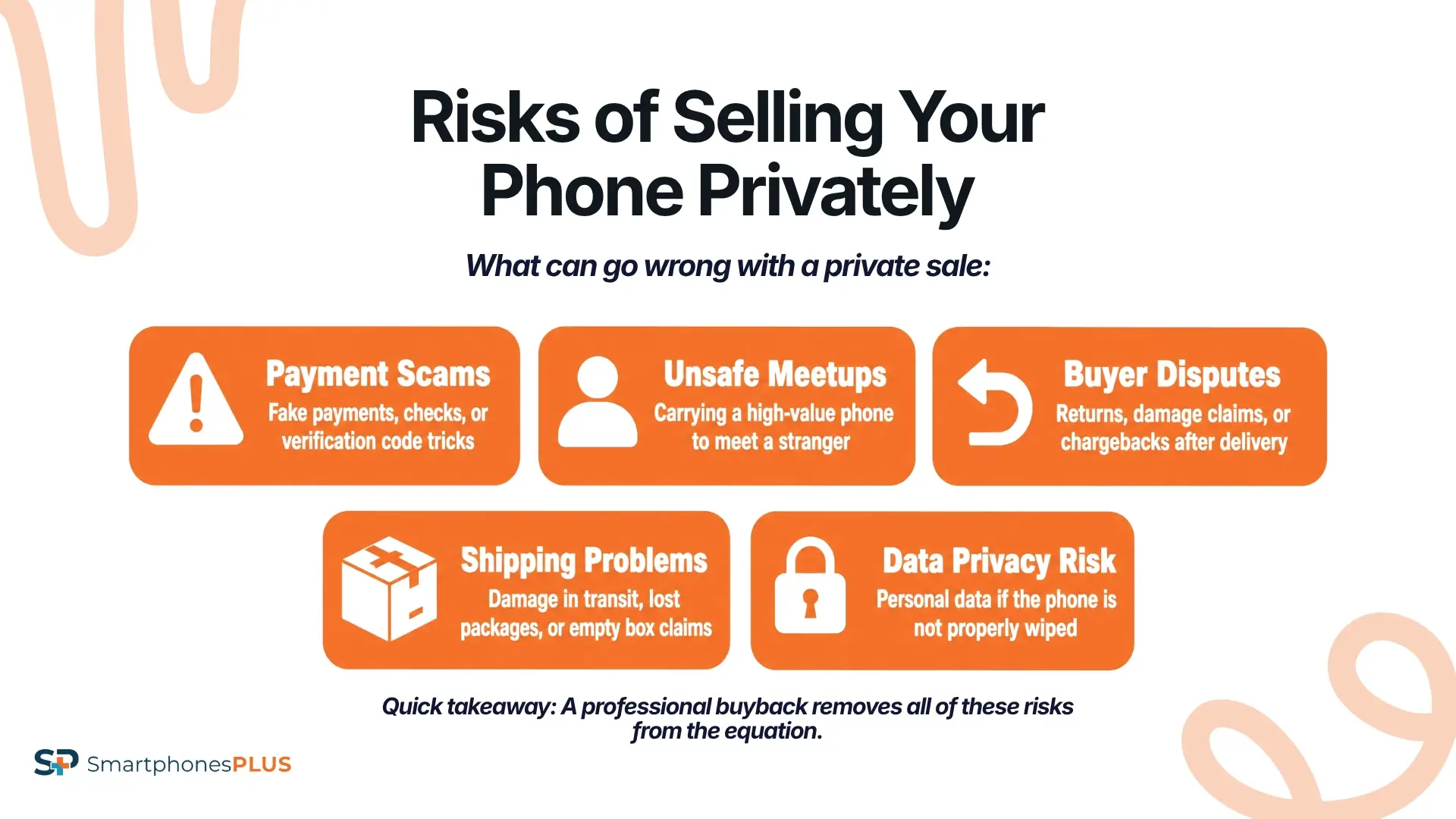
Private selling brings a human element that is hard to price. Many buyers are legitimate, but electronics attract scammers because phones are small, valuable, and easy to resell.
The Federal Trade Commission has warned about a scammer posing as a buyer who asks for a verification code, then uses that code to create a number linked to the seller’s phone. That is one example of how a simple listing can turn into something more complicated than expected.
Local meetups can create safety concerns too. You may be carrying a high-value phone and meeting someone you do not know. Shipping the device avoids the meetup, but it creates a different set of problems, including delivery disputes, damage claims, or payment reversals.
A professional buyback service reduces those unknowns. You are not negotiating with strangers, meeting unknown buyers, or hoping a marketplace sides with you if a dispute appears later.
Shipping Problems Can Change the Sale
Shipping a phone privately sounds simple until something goes wrong. A valuable phone should be packed carefully, tracked, and insured. Those choices affect the sale because you are responsible for getting the device to the buyer in the condition described.
Poor packing can damage the phone in transit. A buyer may claim the box arrived empty or the device was different than expected. A carrier may require proof of value before paying an insurance claim. Review processes can take time, and payment may be tied up while the issue is handled.
With a trade-in, the process is more controlled. At SmartphonesPLUS, you receive prepaid shipping for your device. Extra protection may also be worth adding for high-value shipments.
Data Safety Deserves More Attention
A phone is not a normal used item. It holds photos, messages, emails, banking apps, passwords, saved cards, health data, location history, and account access.
Private buyers mainly care that the phone works. You are responsible for backing up your data, signing out of accounts, removing locks, and factory resetting the device before sale. If the screen is damaged or the phone will not power on, that can be harder.
A professional trade-in process adds another layer. At SmartphonesPLUS, devices are inspected and wiped after arrival. Customers should still reset their phones before shipping, but that added professional process helps reduce the risk of personal information staying on a device.
When a Private Sale Can Still Make Sense
Private selling can work well if you already have experience selling electronics and you are comfortable managing the process.
It may be a good fit if your phone is a high-demand model, in excellent condition, unlocked, paid off, and easy to ship safely. It can also work if you have a trusted local buyer or a marketplace account with strong seller history.
The key is being honest about the job you are taking on. You are handling pricing, marketing, payment screening, packing, shipping, and customer service. If you enjoy that process and know how to avoid common traps, the higher gross price may be worth the extra effort.
When Trading In Is the Better Fit
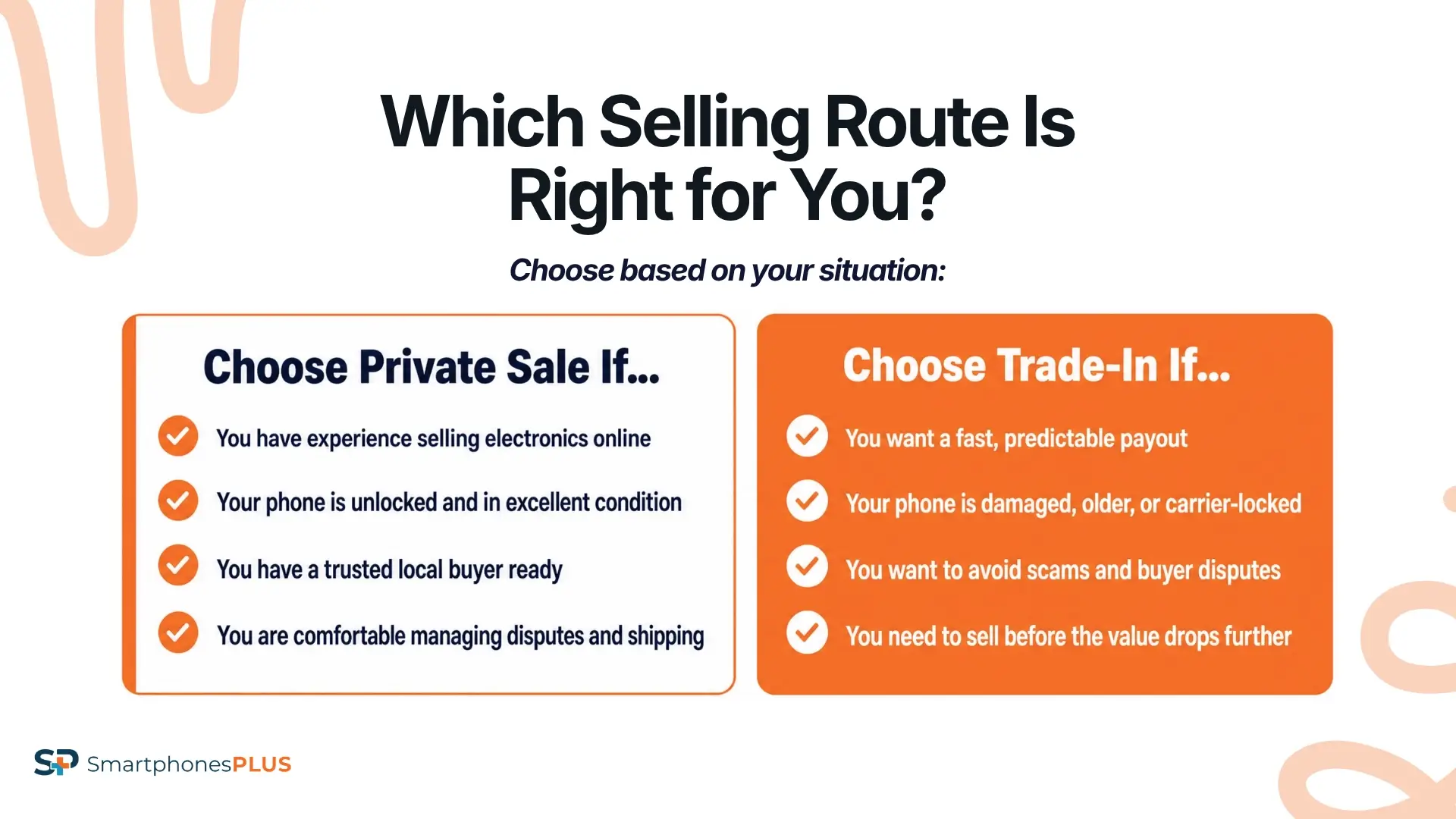
Trading in is usually the better fit when you want a clear price, fewer messages, and a faster path to payment. It is also helpful when you do not want to handle marketplace disputes, buyer returns, or local meetups.
This route is especially useful for damaged phones, carrier-locked devices, older models, and phones you want to move before values drop again. A buyer looking for a perfect bargain may pick apart every flaw. A professional buyback process is built to evaluate used devices in a more consistent way.
If you are still asking whether it is better to trade in or sell, think about the type of sale you want to manage. The better route is the one that fits your tolerance for effort, delay, and uncertainty. For many sellers, avoiding the hassle is part of the value.
Make the Sale Worth Your Time
A private sale can look great in a screenshot, but the real value is what you keep after the work is done. Trading in gives you a cleaner way to turn an old phone into cash without managing a marketplace sale from start to finish.
The right route is the one that matches your priorities. If you enjoy selling online and know how to protect the transaction, a private sale may work. If you want a simple quote, a controlled process, and less back-and-forth, trading in may be the smarter route.
If your old phone is sitting in a drawer, compare the real value before choosing a route. Get an instant quote from SmartphonesPLUS today.
FAQs About Trading In vs Selling Privately
Is it better to trade in or sell privately?
Trading in is usually better if you want a faster, safer, and more predictable sale. Selling privately can bring a higher price, but the amount you keep can shrink once the sale takes real work to complete.
Do I get more money selling my phone privately?
You may get a higher gross price through a private sale, especially for a newer unlocked phone in excellent condition. The net amount can be lower once you subtract selling costs and the value of your time.
What is the safest way to sell an old phone?
The safest route is usually a reputable buyback service because you avoid meeting strangers, handling payment checks, and managing buyer disputes. You should still back up your data, sign out of accounts, and factory reset the device before sending it in.
Are marketplace fees worth it when selling a phone?
Marketplace fees can be worth it for experienced sellers who know how to price, ship, and protect transactions. For one-off sellers, those fees can make the private sale less profitable than it first appears.
Should I trade in a damaged phone or sell it privately?
Trading in is often easier for damaged phones because professional buyback companies already know how to evaluate, repair, reuse, or recycle devices. Private buyers may ask for steep discounts or raise disputes if damage is not described exactly.


