
If you’ve ever searched “Where can I sell my broken phone?”, you’ve probably seen dozens of options promising quick cash and “top dollar.”
At first, getting cash for a broken phone can seem pretty straightforward. But the reality is that not every buyer is trustworthy, and it’s easy to get pulled in by big promises only to end up with a last-minute lowball offer, a deal that falls through, or worse, your personal data in the wrong hands.
But before you toss your broken phone in a drawer and call it a loss, there’s something you should know: your damaged device may still be worth real money, and selling it safely is often much easier than you might expect.
At SmartphonesPLUS, we’ve spent years helping people safely sell damaged devices. And in this guide, we’re sharing everything we’ve learned about understanding your phone’s true value, avoiding common resale scams, and finding trustworthy buyers, so you can sell smarter and get the best possible return on your device.
Understanding What “Broken” Really Means
Before you can safely sell your device, you need to understand what “broken” actually means to a buyer.
A phone with a cracked screen is very different from a phone that’s been submerged in a lake, and even smaller issues, like a weak battery, broken camera, or faulty charging port, can have a major impact on what your device is worth. In other words, not all damage is created equal.
That’s why understanding your phone’s true condition matters. If the condition is categorized incorrectly, your final offer from a buyback company or online buyer may change. It can feel frustrating, but more often than not, it comes down to a mismatch in how “broken” was defined, not necessarily anything shady.
The Broken Phone Condition Guide
To help you understand what your phone is actually worth, we’ve broken down the most common types of damage and how they typically affect resale value.
| A Quick Guide to Broken Phone Conditions & Value | ||
|---|---|---|
| Damage Category | What It Means | Typical Value Impact |
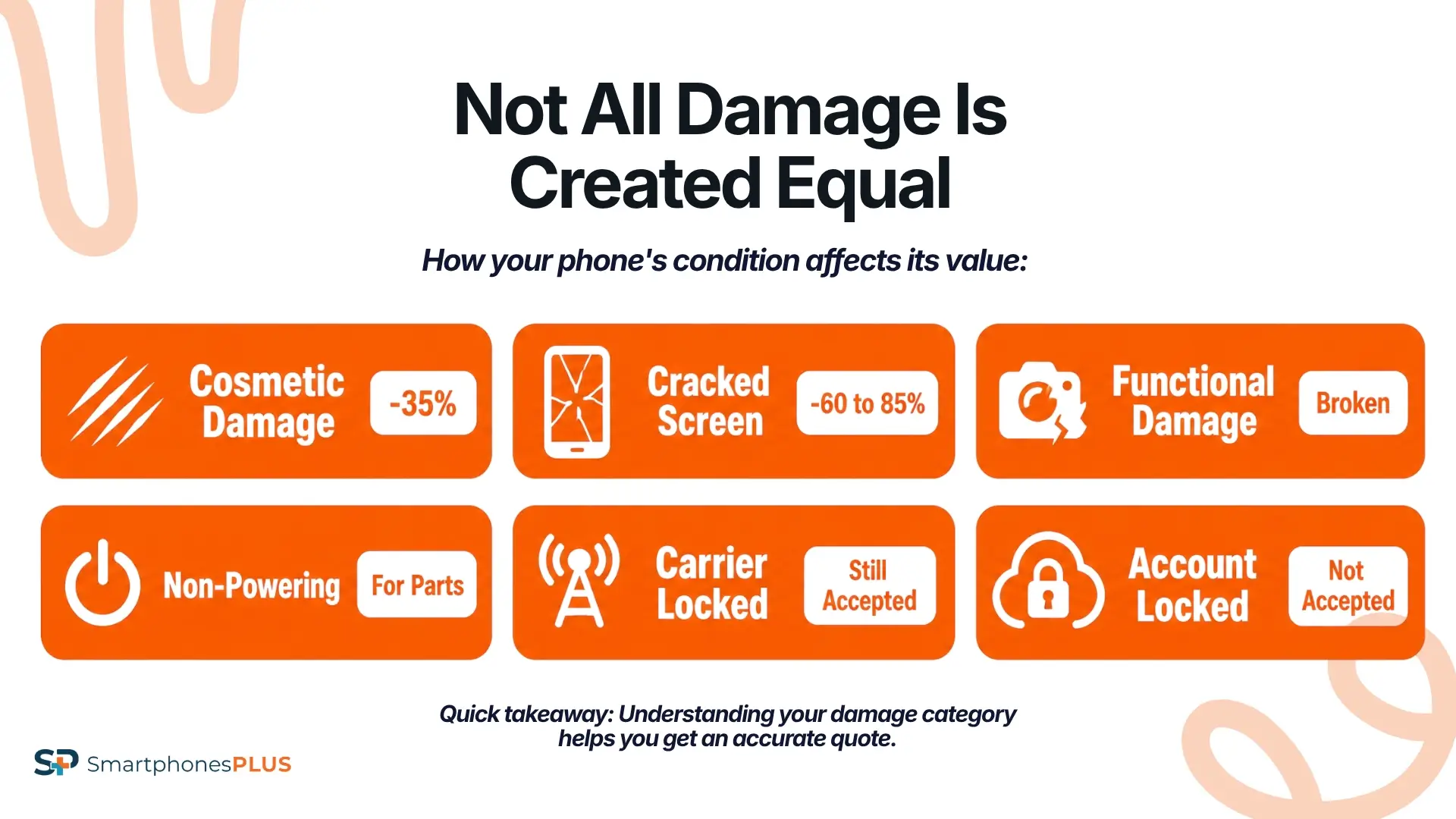
| Cosmetic Damage | Heavy scratches, deep scuffs, or dents on the frame. The screen is intact, and the phone functions perfectly. | Drops from “Flawless” to “Fair” (approx. 35% decrease) |
| Cracked Screen/Glass | The front glass or back glass is cracked, but the phone still turns on and functions. | 60-70% decrease for iPhones; 80-85% decrease for Samsung |
| Functional Damage | Broken cameras, dead microphones, broken buttons, or a battery that will not hold a charge. | Varies by part, but generally categorized as “Broken” |
| Non-Powering | The device will not turn on at all, or it’s stuck in a boot loop. | Categorized as “Broken” or “For Parts” (lowest value tier) |
| Carrier Locked | The phone is still tied to a carrier network (such as AT&T or Verizon) and hasn’t been unlocked. | May reduce resale value, but most reputable buyers (including SmartphonesPLUS) will still accept carrier-locked devices. |
| Account Locked | iCloud locked or Google account locked. | Typically not accepted by reputable buyers until the account lock is removed. |
The Anatomy of a Phone Buying Scam
Now that you have a better idea of what your phone may actually be worth, let’s talk about the other side of the equation: avoiding scams. Because, unfortunately, not every company advertising “top dollar” has your best interests in mind.
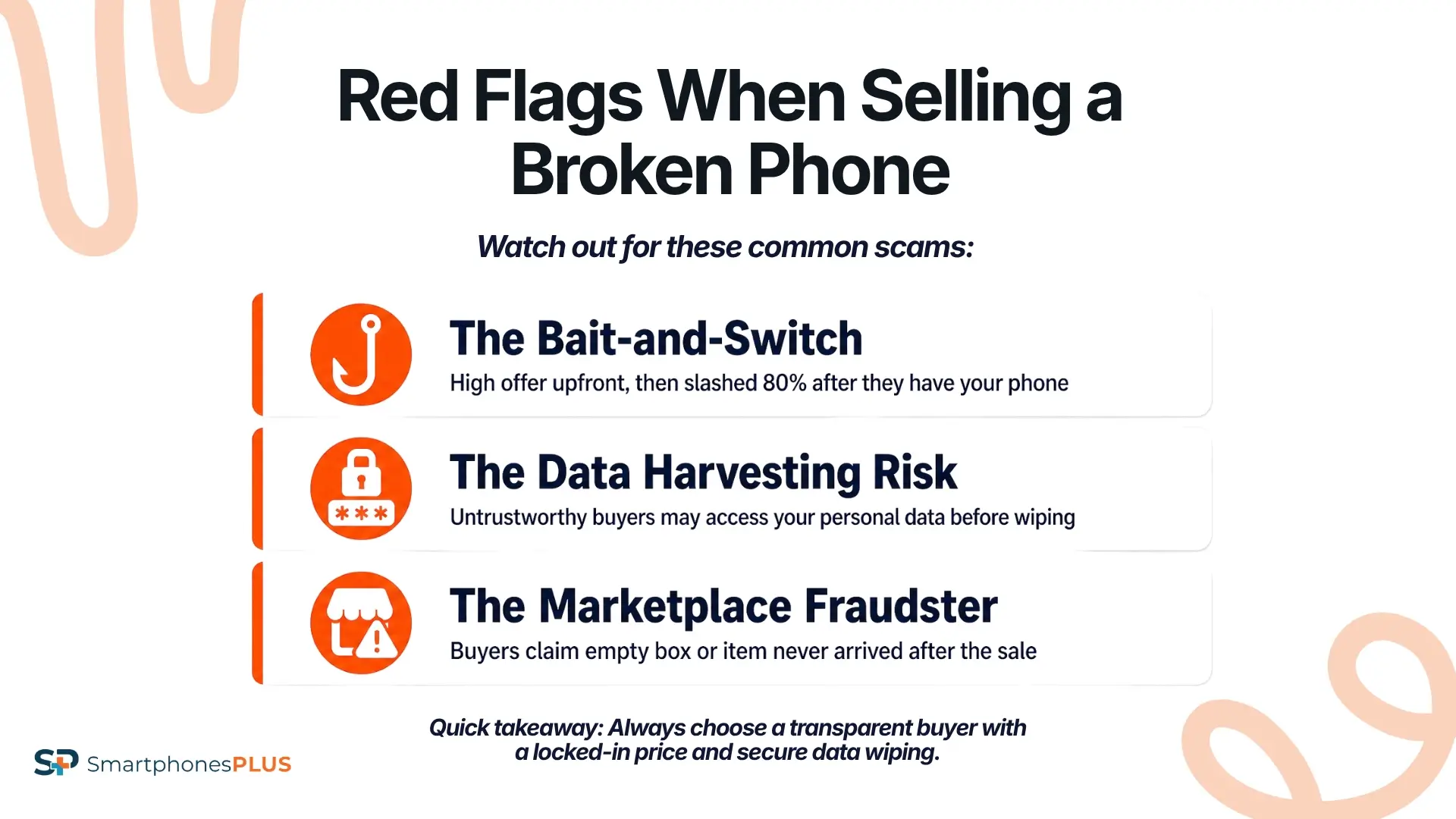 Here are the biggest red flags to watch for when selling a broken phone.
The Bait-and-Switch Tactic
This is the most prevalent scam in the industry. A company will advertise an incredibly high payout for your broken phone, often much higher than any competitor. You ship them the device, and a few days later, you receive an email stating that they found “additional damage” and are slashing the offer by 80%.
They know that once they have your phone, you’re unlikely to go through the hassle of demanding it back, and then they hold your device hostage until you accept the lowball offer.
The Data Harvesting Risk
When you sell a broken phone, especially one with a dead screen that you can’t easily factory reset, you’re handing over a device that may still contain a surprising amount of personal information.
Think about everything stored on your phone for a second: photos, saved passwords, banking apps, emails, text messages, and even automatic logins to accounts you use every day. If that device ends up in the wrong hands, there’s a risk that sensitive information could be accessed before the phone is properly wiped.
That’s why choosing a reputable buyer matters. Trustworthy companies follow secure data-erasure practices to protect your information, even if your phone no longer powers on or the screen doesn’t work.
The Marketplace Fraudster
Selling your broken phone directly through platforms like eBay or Facebook Marketplace might sound like a good way to get more money, but it can come with extra risk.
One of the most frustrating scams happens after the sale is already complete. A buyer receives the phone, then files a claim saying the box was empty, the phone was different from what was described, or the item never arrived at all. In some cases, the platform sides with the buyer, leaving you without your phone and without payment.
Where Can I Sell My Broken Phone Safely?
Now that you know what to avoid, let’s look at the safe, legitimate options for selling your damaged device.
Option 1: Carrier Trade-In Programs
Most major carriers, including Verizon, AT&T, and T-Mobile, will accept broken phones as trade-ins when you upgrade to a new device. For many people, this feels like the easiest option because the process is familiar, relatively secure, and built into something they were already planning to do.
There’s also peace of mind that comes with working through an established company. You don’t have to worry as much about sketchy buyers, shipping disputes, or handing your device over to someone untrustworthy.
The tradeoff, however, is flexibility and value. Carriers typically don’t hand you cash for a broken phone. Instead, they offer bill credits spread over 24 to 36 months, meaning your payout is tied to staying with that provider. If you switch carriers early, you’ll usually lose any remaining credits. On top of that, trade-in values for damaged phones tend to be lower than what you might get through a specialized buyback company.
Option 2: Automated Kiosks
You’ve probably seen phone-buying kiosks tucked into malls, grocery stores, or big-box retailers. The appeal is obvious: plug in your phone, let the machine assess it, and walk away with cash in minutes.
If convenience is your top priority, kiosks can be tempting. There’s no shipping involved, no waiting for inspection, and no back-and-forth negotiation. For someone who just wants to be done with a broken phone, instant payment can feel like the easiest route.
The downside is that convenience comes at a cost. Automated kiosks are known for offering some of the lowest payouts in the industry, especially for damaged phones. Because these machines carry high operating costs and take on more risk, they tend to compensate by offering significantly less than what your phone may actually be worth. In many cases, the speed of the process means sacrificing a much better payout elsewhere.
Option 3: Professional Online Buyback Companies
For most people, selling to a reputable online buyback company offers the best middle ground between convenience, safety, and getting a fair payout. Unlike carrier trade-ins or kiosks, professional buyback services are built specifically around evaluating used and damaged devices, which often means a smoother process and better value for broken phones.
Of course, not all companies operate the same way, which is why it’s important to choose one with a transparent process.
At SmartphonesPLUS, we’ve designed our process to be as simple and transparent as possible.
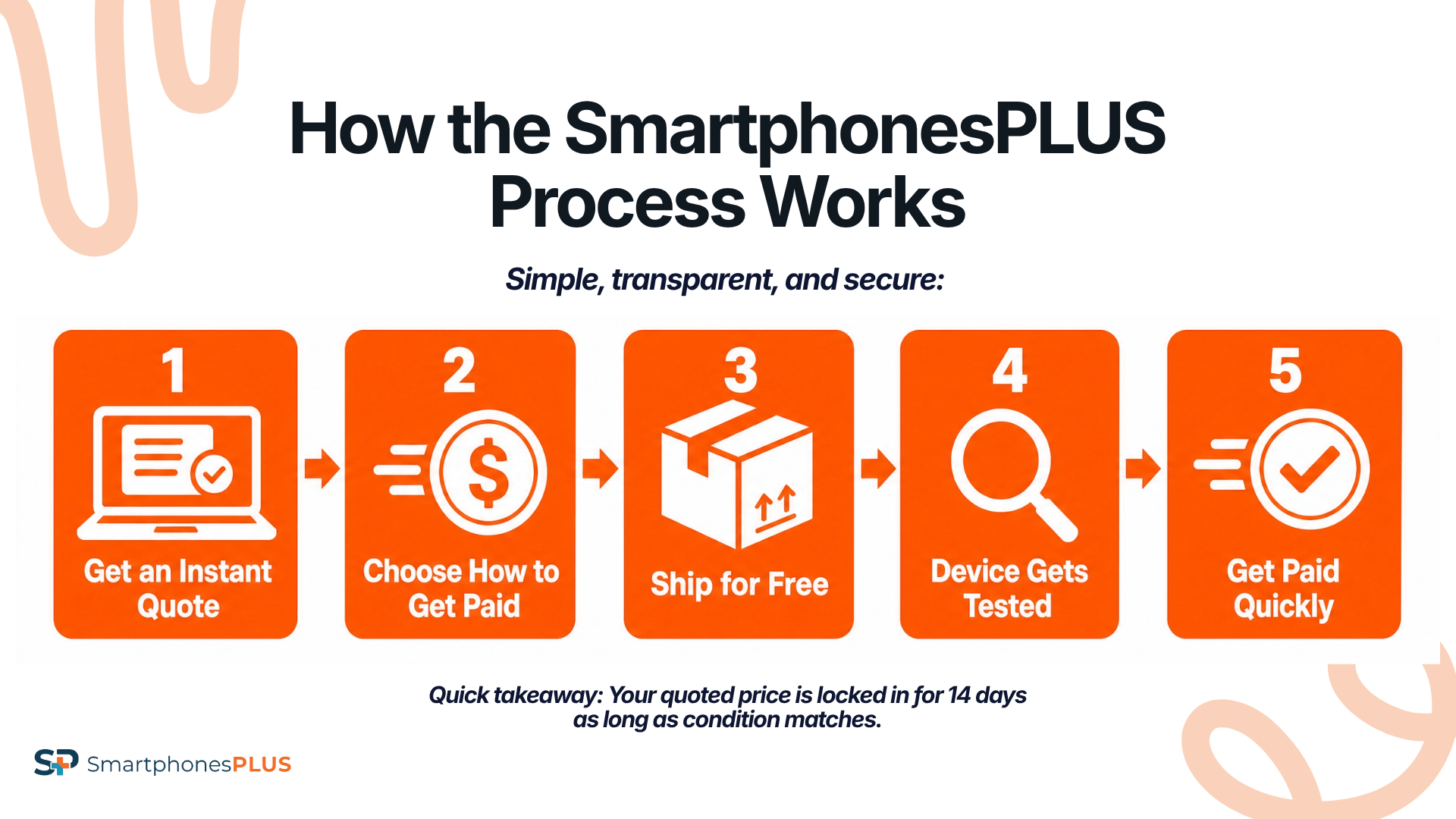
Here’s a quick rundown of what you can expect:
- Get an instant quote online. Start by selecting your device and answering a few quick questions about its condition, storage size, and carrier. If you’re not sure of which specifications your phone has, don’t worry, you’ll get guidance along the way.
- Choose how you want to get paid. Once you have your offer, pick the payout method that works best for you, whether that’s ACH, check, Venmo, PayPal, or a prepaid digital card.
- Ship your phone for free. After checkout, you’ll receive a prepaid shipping label (or QR code if you don’t have a printer). Pack your phone securely and send it in; your quoted price stays locked for 14 days as long as the condition matches your original description.
- Your device gets professionally tested. Once it arrives, the phone is inspected using diagnostic software and reviewed by a technician to confirm the condition, verify key functions, and securely wipe personal data.
- Get paid (or review an updated offer). If everything matches your quote, payment is sent quickly. If something is different, you’ll receive a revised offer and can either accept it or have your device returned at no cost.
Selling a broken phone should never feel complicated, and a trustworthy buyback company will always keep you informed, protect your data, and provide fair payment.
Turning a Broken Phone into Cash
Breaking your phone is a chaotic, frustrating experience. But you don’t have to compound that frustration by falling victim to a scam or accepting a terrible lowball offer.
By understanding exactly how your phone’s damage is categorized, recognizing the red flags of shady buyers, and choosing a reputable, transparent buyback company, you can safely turn that shattered glass and dead battery into real cash to fund your next device.
FAQs About Where to Sell a Broken Phone
Will anyone buy a phone that has been dropped in water?
Yes, professional buyback companies will purchase water-damaged phones. However, water damage is considered severe functional damage because it corrodes the internal logic board. Typically, the phone will be graded in the “Broken” category, but it still holds some cash value.
Do I need to fix my cracked screen before selling my phone?
In almost all cases, no. The cost of a professional screen repair is usually higher than the value you lose by selling it broken. Professional buyback companies have access to wholesale parts and can repair the screen much cheaper than you can.
What happens if I forget to remove my iCloud account from a broken phone?
If you send a broken phone to a buyback company with the iCloud or Google account still locked, they cannot process the device. They will contact you and ask you to remove the lock remotely via your phone or computer. If you can’t or won’t remove the lock, they will have to return the phone to you, as it is legally considered unusable.
How do buyback companies wipe data from a phone with a dead screen?
Professional companies use specialized diagnostic and erasure software, like Phonecheck. This involves connecting the broken phone directly to a computer terminal, which bypasses the need for a working screen. The software then forces a multi-pass data erasure that meets strict data security compliance standards.


