
If you have checked a phone trade-in quote and wondered why one device gets a strong offer while another nearly identical model gets much less, you are not alone. Most people assume value comes down to the obvious details: model, storage, age, and visible scratches.
The bigger answer to “what affects the trade-in value of my phone” is often hidden in the small things people miss before shipping. A tiny corner crack, an account lock, a financed IMEI, a replaced screen, or a faulty microphone can change the trade-in amount significantly. Some issues are easy to overlook because the phone feels normal during daily use.
That is why a quick visual check is not always enough before selling. Modern phones are tested through physical inspection, diagnostic software, carrier checks, and repair-history checks. This guide breaks down five value killers that go beyond basic scratches.
What Affects the Trade-In Value of My Phone the Most?
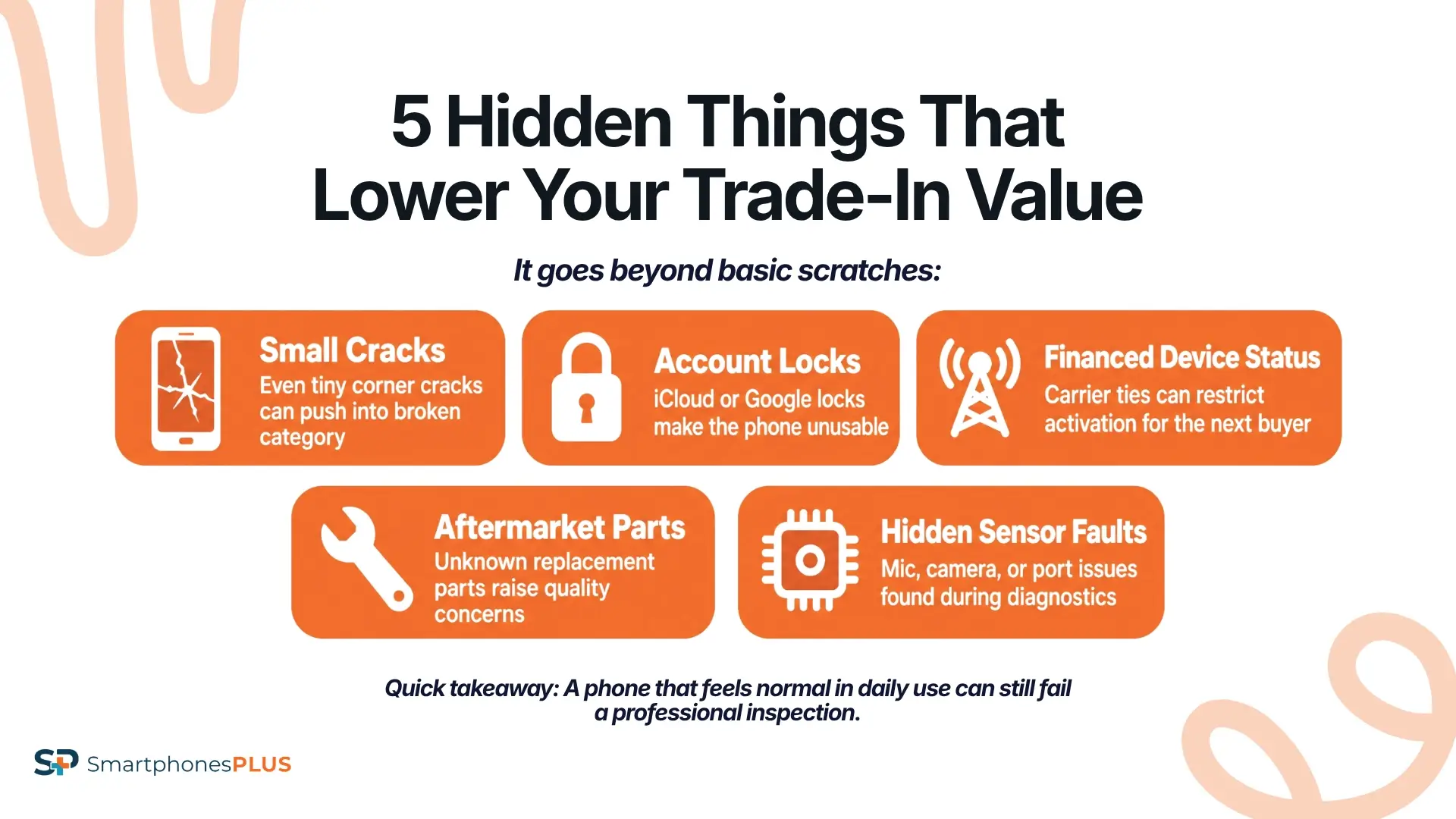
The biggest trade-in drops usually come from issues that change how usable, repairable, or resellable the phone is.
These are the value killers that deserve the closest look before you sell:
- Tiny cracks in the screen or back glass can move a phone into a broken condition category.
- Account locks can make a phone unusable for the next owner until the lock is removed.
- Financed or carrier-locked devices can reduce buyer demand and create activation risk.
- Aftermarket or unknown replacement parts can raise quality and repair-history concerns.
- Faulty sensors, cameras, microphones, or charging ports can make a phone harder to resell.
Some issues can be fixed before selling. Others need to be described accurately when you get your quote.
Value Killer 1 – Small Cracks Easy to Miss
A phone can look clean at first glance and still have damage that changes its condition grade. Small cracks near the screen corner or back glass are some of the easiest problems to miss.
This matters because buyers do not grade cracked glass the same way they grade normal wear. A scratch or scuff may lower a phone from flawless to good or fair. A crack can push it into a broken category, even if the touchscreen still works perfectly.
That difference can be expensive. Cracked iPhones often lose a large percentage of their value, and Samsung phones can take an even larger hit because many premium Samsung screens are costly.
How to Spot Damage Before Shipping
Check the phone in bright light before you choose a condition. Tilt it slowly and inspect the corners, camera area, back glass, screen edges, and frame.
A careful check helps you choose the right condition upfront and avoid a revised amount later.
Value Killer 2 – Account Locks and Financed Device Status
An iCloud lock, Google account lock, or Samsung account lock can do more damage to a phone’s value than many physical defects. The device may power on, but account locks can stop the next owner from setting it up.
That is a major resale problem. A locked phone cannot be used normally until the original account is removed. In many cases, reputable buyers cannot process the device at full value while the lock remains active.
Financed devices create a different kind of risk. If a phone is still tied to a carrier payment plan, that carrier may restrict activation or block network use later. Carrier rules vary, so a phone that seems usable today may still raise concerns during inspection.
What to Remove Before You Sell
Sign out of your accounts, turn off Find My iPhone or similar tracking tools, remove screen locks, and confirm the device is paid off if possible.
A few minutes of account cleanup can prevent delays, rejected devices, and lower revised amounts.
Value Killer 3 – OEM vs. Aftermarket Parts and Repair History
A repaired phone can still be worth good money, but the type of repair matters. A screen replacement with a high-quality OEM part is very different from a cheap aftermarket display that causes warning messages, weak brightness, touch issues, or poor color accuracy.
This is one area many sellers do not think about before getting a quote. The phone may look fine and work well enough for daily use, but repair history can still affect buyer confidence. A used phone buyer wants to know the device will keep working properly after purchase, especially if the repaired part controls something important like the screen, battery, camera, or Face ID system.
Apple makes repair history more visible on many iPhones through Parts and Service History, which can show whether certain repaired parts are genuine, used, or unknown. A buyer may also see signs that a display, battery, or camera has been replaced.
Why OEM Parts Usually Hold More Trust
OEM parts are made by the original manufacturer or match the manufacturer’s expected standards. That usually gives buyers more confidence in performance, fit, and long-term reliability.
Aftermarket parts can vary a lot. Some work well, while others create problems that hurt the trade-in amount. A lower-quality screen may have weaker touch response. A replacement battery may age faster. A camera repair may trigger warnings or affect image quality.
An unknown part message does not automatically make your phone worthless. It does make the device harder to grade, especially if the replacement part affects safety, performance, or resale confidence.
If your phone has been repaired, be honest about it when getting a quote. A transparent repair history is easier to evaluate than a surprise warning found during testing.
Value Killer 4 Hidden Sensor and Component Faults
Some of the most surprising value drops come from parts most people never test. A phone can open apps, send messages, take photos, and still fail checks that affect resale value.
These hidden faults are easy to miss because they do not always affect the way you use the phone every day. A weak microphone might only show up during speakerphone calls. A faulty proximity sensor may stop the screen from turning off during calls. A damaged accelerometer can affect screen rotation, motion tracking, and certain apps. A failing vibration motor might seem minor, but it still means the phone is not fully functional.
Face ID, Touch ID, cameras, speakers, charging ports, Bluetooth, WiFi, and wireless charging can create similar issues. These parts matter because the next owner expects the phone to work across normal daily tasks, including the functions you may rarely use yourself.
Sensor Damage That Sellers Often Miss
Sensor damage can be especially frustrating because it does not always look like damage. The phone may have no cracks, no dents, and no obvious warning signs.
A drop can affect internal components without breaking the glass. Liquid exposure can damage small connectors before the phone stops working completely. Dust or debris in the charging port can make the device charge inconsistently. Camera focus problems can appear only in certain lighting.
Record a short video, test both cameras, make a speakerphone call, plug in the charger, try wireless charging if supported, test Face ID or fingerprint unlock, and rotate the screen. This kind of testing does not replace a professional inspection, but it can reveal problems that would otherwise surprise you later.
Value Killer 5 – Timing and Market Demand
Physical condition is only part of the answer to what affects the trade-in value of your phone. Timing can make a clean, working device worth less without anything being wrong with it.
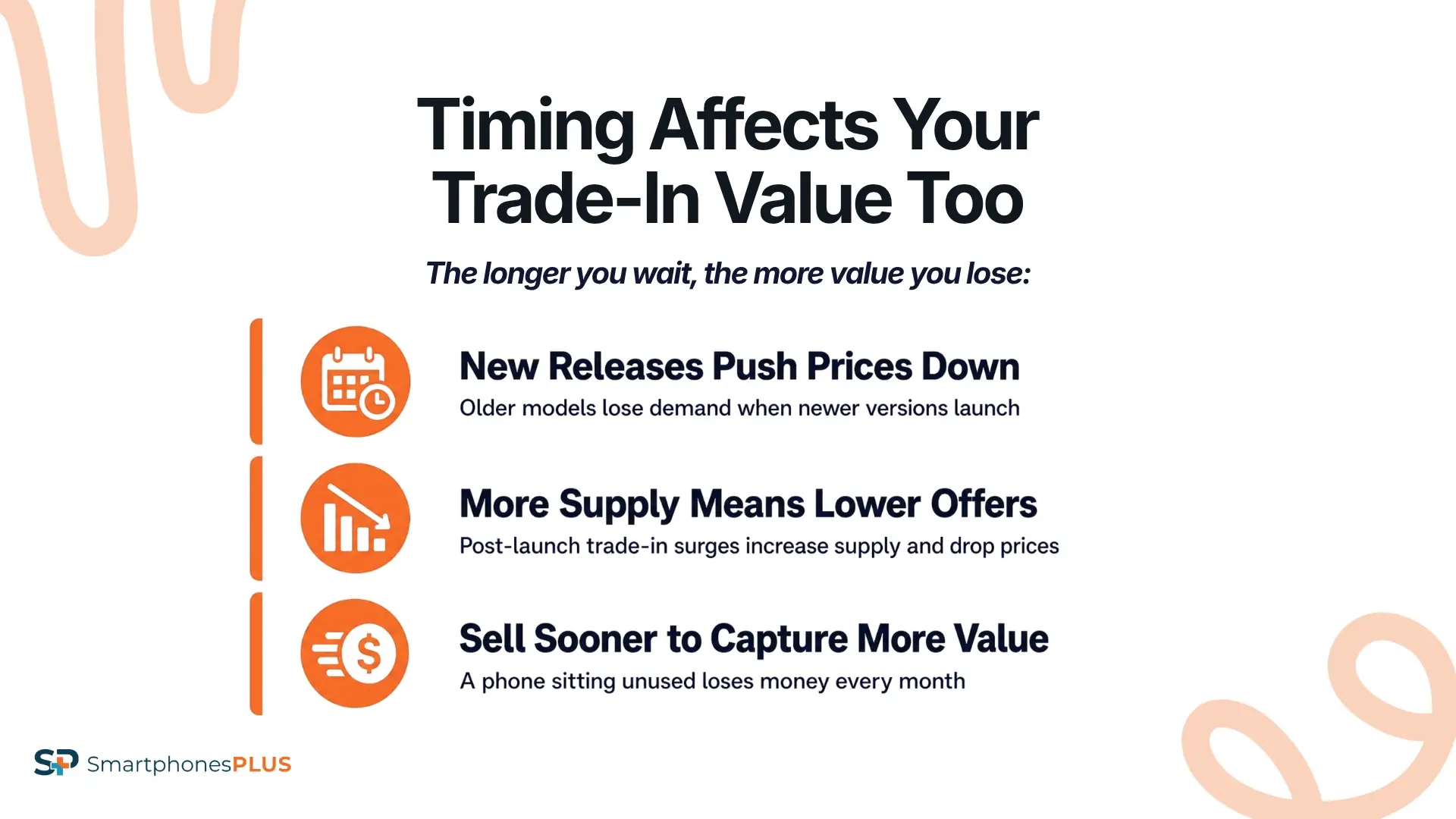
Trade-in values change often because electronics move fast. New product releases can reduce demand for older models. More people also trade in their old devices after upgrading, which increases supply. More supply and lower demand usually push offers down.
This can happen across brands too. A new iPhone release may also affect Samsung and Google devices because shoppers compare used phones across price points. If you already know you are not going to use the device again, getting a quote sooner can help you capture more value.
How to Check Your Phone Before Getting a Quote
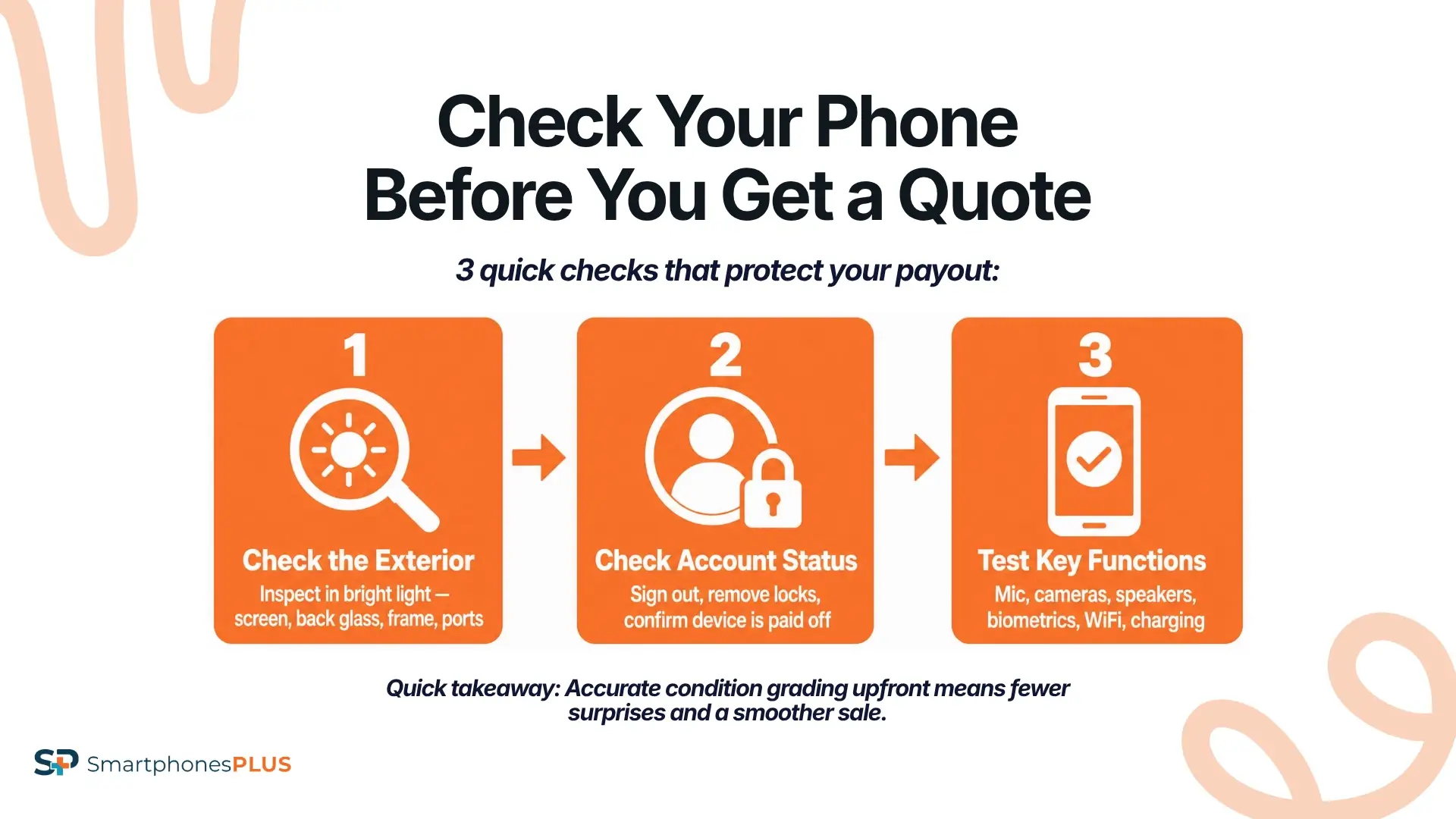
A better quote starts with a more accurate condition check. You do not need professional tools at home, but you can still catch many problems that affect trade-in offers.
Start With the Exterior
Clean the device gently, then inspect the screen, back glass, camera lenses, frame, buttons, and charging port in bright light. Look for cracks, dents, lifted glass, or deep scratches.
Check Account and Carrier Status
Sign out of personal accounts, remove passwords, and confirm the phone is not reported lost or stolen. If the device is paid off, ask your carrier about unlocking it before you sell.
Test the Functions People Forget
Test the microphone, cameras, speakers, biometrics, WiFi, Bluetooth, screen rotation, charging, and touch response. These checks can make it easier to choose the right condition and avoid surprises later.
A factory reset protects your data and helps prepare the phone for inspection. We perform secure data wiping after receiving devices, but doing your own reset first helps too.
Why Transparent Grading Protects Your Payout
Revised offers can be frustrating, especially when you expected one amount and inspection finds something different. The best way to reduce that risk is to describe the device as accurately as possible upfront.
At SmartphonesPLUS, if a device matches the original quote, payment moves forward. If inspection finds something different, a revised offer explains what changed. You can accept the updated offer or have the device returned, as long as it was not excessively misrepresented or tied to serious issues such as stolen status.
A fair trade-in process needs accuracy. The more closely your selected condition matches the device we receive, the smoother the sale usually feels.
Catch Hidden Issues Before They Cost You
Your phone’s trade-in value is rarely decided by one scratch. Even small issues can have a major impact when they affect activation, repair costs, buyer trust, or everyday usability.
Timing matters too. Values usually fall as newer models arrive and older devices become easier to find, so a phone sitting in a drawer may lose money month after month.
If your old phone is still unused, now is the time to see what it is worth. Get an instant quote and sell your old device with SmartphonesPLUS.
FAQs About Phone Trade-In Value
What affects the trade-in value of my phone the most?
The biggest factors are model, age, storage, condition, account status, carrier status, repair history, and key functions. Issues that affect activation, repair cost, trust, or daily use can reduce the final payout.
Do aftermarket parts always lower phone trade-in value?
Aftermarket parts do not always lower value, but they can affect the offer if they create warnings, performance issues, or buyer confidence concerns. A repaired phone with high-quality parts and full functionality is easier to resell than one with unknown or faulty components.
Can a phone with a cracked back still be sold?
Yes, many buyback companies will purchase phones with cracked back glass. The payout will be lower because back glass repair can be expensive, but the device may still have cash value.
Does carrier lock status affect trade-in value?
Yes, carrier-locked phones can have lower resale value because they work with fewer buyers. Many carrier-locked phones can still be sold, but unlocked phones usually attract stronger offers.
Should I repair my phone before trading it in?
In many cases, selling as-is makes more sense than paying for repair first. A repair only makes financial sense if it increases the final offer by more than the repair costs.


