
The console wars have been raging for decades, with passionate fans defending their chosen platforms. But when the dust settles and it is time to upgrade, a different kind of battle emerges: the battle of resale value. If you are considering a trade-in console, you might be surprised to find that not all gaming systems hold their value equally.
In fact, the difference in depreciation between the major gaming ecosystems can cost you a significant amount of money if you wait too long to sell.
Many gamers assume that because the Xbox Series X and the PlayStation 5 launched at the same price point, they will retain similar values on the secondary market. However, market dynamics, exclusive game libraries, and overall consumer demand play a massive role in determining how much cash you can get for your used system. Understanding these factors is crucial if you want to maximize your return when it is time to upgrade.
In this article, we are going to look at the hard numbers behind console depreciation. We will compare the Xbox vs. PS5 to see which trade-in console is currently losing you the most money.
By understanding these trends, you can make an informed decision about when to sell.
The Reality of Console Depreciation
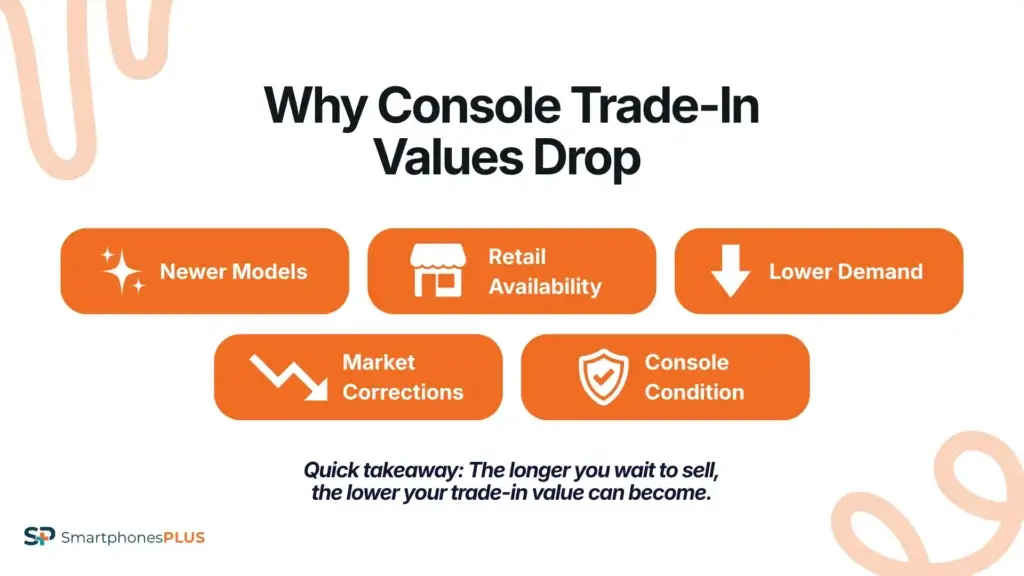
Like used phones and cars, gaming consoles begin to lose value the moment you take them out of the box. This depreciation is driven by several factors, including the release of newer models, the availability of the console at retail, and the overall demand from the gaming community.
During the first year or two after the launch of the PS5 and Xbox Series X, both consoles held
their value incredibly well. This was largely due to severe supply chain shortages that made it nearly impossible to find either system on store shelves. Desperate gamers were willing to pay near-retail prices for used consoles, keeping trade-in values artificially high.
However, as supply chain issues resolved and both consoles became readily available, the secondary market corrected itself. Trade-in values began to drop, and a clear divergence emerged between the two major platforms. According to VGChartz sales data, the PlayStation 5 has significantly outsold the Xbox Series X/S, with an estimated 86 million units sold compared to 34 million for Xbox.
This massive difference in market share has a direct impact on resale value.
PS5 Trade-In Value and Why It Holds Steady
The PlayStation 5 has proven to be a powerhouse in terms of both sales and value retention. Sony’s strategy of releasing highly anticipated, exclusive titles has kept demand for the console consistently high. Games like Spider-Man, God of War, and The Last of Us drive consumers to the PlayStation ecosystem, creating a steady stream of buyers on the secondary market.
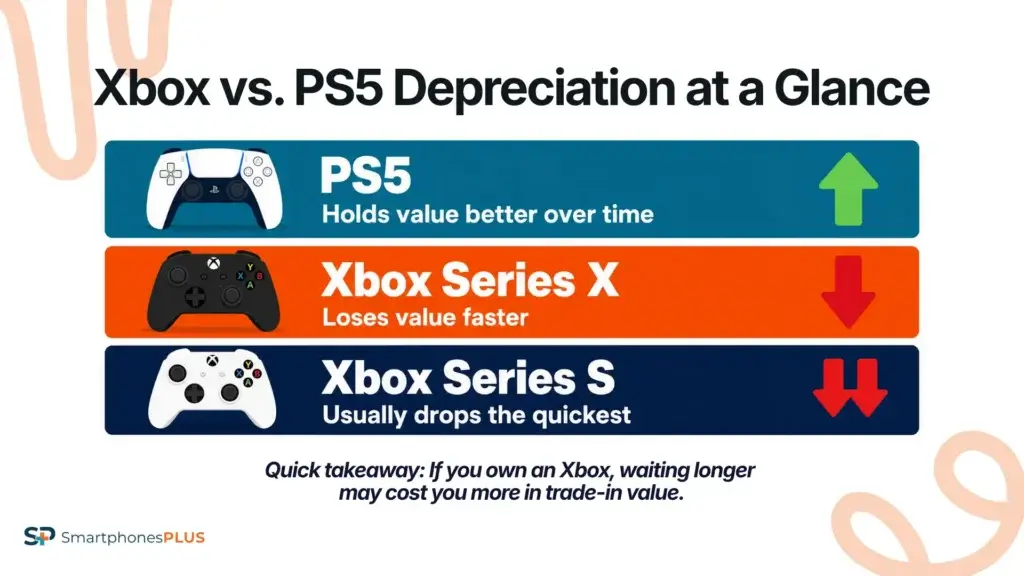
Because demand remains strong, the PS5 depreciates at a slower rate than its competitors. If you are looking to trade in a PS5, you can generally expect to receive a higher percentage of your original purchase price compared to other systems.
This strong value retention makes the PS5 a relatively safe investment for gamers who like to upgrade frequently. You can enjoy the console for a few years and still recoup a significant portion of your money when you decide to sell.
Xbox Series X Trade-In Value and the Steeper Decline
The story is quite different for the Xbox Series X. While it is a powerful and capable console, Microsoft’s strategy has shifted away from hardware exclusivity and toward its Game Pass subscription service. Many Xbox games are also available on PC, which reduces the absolute necessity of owning the console itself.
This broader availability, combined with lower overall hardware sales, has led to a softer secondary market for the Xbox Series X. Demand is simply not as high as it is for the PS5, which means buyback companies and private buyers are not willing to pay as much for a used system.
If you own an Xbox Series X and are considering a trade-in console, you are likely losing money at a faster rate than your PS5-owning counterparts. The longer you wait to sell, the wider that value gap becomes.
Xbox vs. PS5 Depreciation Comparison
To make the difference in value retention crystal clear, let’s look at a direct comparison of the estimated depreciation rates for both consoles. This table illustrates how much value each system typically loses over time based on SmartphonesPLUS internal sales data.
| Console | Launch Price | 1 Year Depreciation | 2 Year Depreciation | 3 Year Depreciation |
|---|---|---|---|---|
| PlayStation 5 (Disc Edition) | $499 | 20% – 25% | 35% – 40% | 45% – 50% |
| Xbox Series X | $499 | 30% – 35% | 45% – 50% | 55% – 65% |
| Xbox Series S | $299 | 35% – 40% | 50% – 55% | 60% – 70% |
As the data shows, the Xbox Series X consistently loses value faster than the PS5. By the third year of ownership, an Xbox owner could be looking at a significantly lower trade-in offer compared to a PS5 owner, despite both consoles having the same initial retail price.
Timing is everything when it comes to selling your gaming hardware.
The Role of Exclusive Games in Resale Value
One of the most significant drivers of console resale value is the strength of the platform’s exclusive game library. When a console has games that you cannot play anywhere else, it creates a captive audience of buyers who need that specific hardware to access those experiences.
Sony has consistently invested in high-profile, critically acclaimed exclusive titles that drive hardware sales and maintain demand on the secondary market. When a new installment in a beloved franchise is announced, demand for PS5 hardware spikes, which benefits anyone looking to sell their system at that time.
Microsoft, on the other hand, has made a deliberate choice to release most of its first-party titles on both Xbox and PC via Game Pass. While this is a great value proposition for subscribers, it weakens the argument for owning the hardware itself. A gamer who can play every Xbox exclusive on their PC has little reason to buy a used Xbox Series X, which suppresses demand and drives down resale prices.
When is the Best Time to Sell Your Trade-In Console?
Timing is everything when it comes to maximizing your trade-in value. If you wait until a new console generation is announced, the value of your current system will drop significantly overnight.
The best time to trade in your console is typically right before a major hardware revision or a highly anticipated game release that you do not plan to play. For example, if rumors of a “Pro” version of a console start circulating, it is a good idea to sell your current system before the official announcement drives prices down.
Additionally, the holiday season is often a great time to sell. Demand for gaming consoles spikes in November and December, which can lead to slightly higher trade-in offers from buyback companies looking to build their inventory for the holiday rush.
How to Maximize Your Trade-In Value

Regardless of which console you own, there are several steps you can take to get the highest possible offer when you decide to sell.
First, keep your console and its accessories in good condition. A system with heavy scratches, dents, or a malfunctioning disc drive will receive a significantly lower offer than one that looks and functions like new. Using a dust cover when the console is not in use can help preserve its condition.
Second, always include the original controller and power cables. Buyback companies have to replace missing accessories before they can resell the console, and they will deduct that cost from your offer. If you still have the original box, including it can sometimes bump up your payout slightly.
Finally, make sure to perform a complete factory reset before sending your console in. This protects your personal data, including your payment information and account credentials, and leaves the system ready for the next user.
The Retail and Manufacturer Trade-In Trap for Consoles
Some retailers and manufacturers offer trade-in programs for gaming consoles, often tied to discounts on new hardware or promotional offers. While these deals can look appealing at first glance, they usually come with limitations that reduce the overall value you receive.
Many trade-in programs from retailers like Best Buy or GameStop pay out in store credit instead of cash. This means you’re locked into spending the value within that retailer’s ecosystem rather than having the flexibility to use the money elsewhere. In many cases, the trade-in values offered are also lower than what dedicated online buyback companies or resale platforms provide.
For a broader look at how trade-in offers compare to direct selling, our article on carrier trade-in vs selling for cash breaks down some of the key differences and trade-offs involved.
The Smart Way to Sell Your Console
When you are ready to trade in your console, you have a few options. You can try to sell it privately on platforms like eBay or Facebook Marketplace, but that comes with the risks of scams, lowball offers, and the hassle of managing the sale yourself.
Alternatively, you can take it to a retail gaming store, but they are notorious for offering low trade-in values, often pushing you to accept store credit instead of cash. The convenience of an in-store trade-in rarely justifies the significant reduction in payout.
The smartest and most efficient way to sell your console is to use a reputable online buyback company. These services offer competitive, upfront cash quotes based on the current market value of your specific system. You get a prepaid shipping label, and once the console is inspected, you get paid quickly and securely.
Our guide on top buyback sites that actually pay well for used electronics can help you identify the best options.
The Bigger Picture on Gaming Hardware as a Depreciating Asset
It is worth stepping back and thinking about gaming consoles as what they truly are: depreciating assets. Like any consumer electronics product, their value declines over time, and the rate of that decline is influenced by market forces that are largely outside your control. The same depreciation dynamics that affect smartphones apply here, as our article on how phone trade-in values drop over time demonstrates with hard data.
The best strategy for any gamer who wants to minimize the financial impact of upgrading is to sell early and sell often. The longer you hold onto a console, the more value you lose. By selling your current system before the next generation is announced, you can capture the maximum possible trade-in value and use that cash to offset the cost of your next purchase.
This is especially true for Xbox owners, who are currently facing a steeper depreciation curve than their PS5-owning counterparts. If you have an Xbox Series X or Series S sitting unused, every month you wait is money left on the table.
Stop Losing Money on Your Old Hardware
If you have an Xbox Series X or a PS5 sitting unused under your TV, it is actively losing value every single day. The depreciation clock is ticking, and the longer you wait, the less cash you will get for your trade-in console.
Don’t let your old gaming hardware turn into a depreciating paperweight. Trade-in your game console and turn it into cash that you can use for new games, PC upgrades, or anything else you want.
Trade In Your Console Today
Ready to cash in on your gaming hardware? Stop losing money to depreciation and get a fair, guaranteed offer right now. Start your trade-in console process with SmartphonesPLUS today and get paid fast.

FAQs About Console Trade-Ins
Which console holds its value better, Xbox or PS5?
Currently, the PlayStation 5 holds its value significantly better than the Xbox Series X. Higher consumer demand and a strong library of exclusive titles keep the resale value of the PS5 higher on the secondary market.
Can I trade in a console without the controller?
Yes, you can trade in a console without the controller, but your offer will be significantly lower. Buyback companies must replace the missing controller before reselling the unit, so they deduct that cost from your payout.
Do I need to factory reset my console before trading it in?
Yes, you should always perform a full factory reset before trading in any gaming console. This removes your personal accounts, saved games, and payment information, protecting your privacy.
Will a buyback company accept a broken console?
Many buyback companies will accept broken or malfunctioning consoles, but the payout will be much lower than a working unit. They purchase these systems for their salvageable parts and components. Some will even accept really old game consoles for free recycling.
Is it better to get cash or store credit for a console trade-in?
Getting cash from an online buyback company is almost always better than accepting store credit from a retail shop. Cash gives you the freedom to spend your money anywhere, while store credit locks you into purchasing from that specific retailer.


